
The tax credit conversation around the One Big Beautiful Bill Act has been dominated by lawyers and policy analysts. That's appropriate, because the statutory mechanics of ITC and PTC eligibility are genuinely complex.
But there's a parallel conversation that hasn't happened yet. One that belongs to engineers.
Under the OBBBA, new wind and solar projects must either begin construction on or before July 4, 2026, or be placed in service by December 31, 2027, to remain eligible for the ITC and PTC. And the 5% safe harbor (the method that allowed developers to qualify by simply incurring 5% of total project costs) has been largely eliminated for projects over 1.5 MW AC. What remains is the Physical Work Test: tangible, documentable, defensible evidence that real construction has begun.
That's an engineering problem, not a legal one.
The IRS has been reasonably specific about what qualifies. Applicable wind and solar projects satisfy beginning of construction if there is some on-site or off-site physical construction, and such projects are placed in service by the end of the calendar year four years after construction begins.
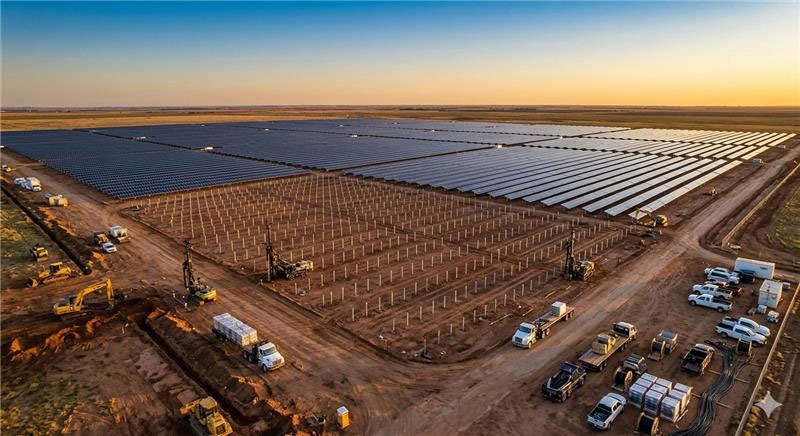
On-site work means excavating foundations, pouring concrete, installing racking. Off-site work means manufacturing or assembling non-inventory components under a binding written contract - components that are custom to a specific project.
What it does not mean: procurement of standard inventory. Equipment sitting in a warehouse doesn't qualify. A signed PO for generic racking doesn't qualify. The test is whether the work is specific, physical, and documentable.
This is where engineering delivery becomes a tax credit issue.
To credibly demonstrate that physical work has begun, and to defend that position if questioned, a developer needs more than site photos. They need a set of engineering deliverables that establishes specificity: that the work performed was designed for this project, at this site, to these specifications.
That means:
Site-specific foundation and civil drawings: Generic grading plans don't carry the same weight as drawings stamped for a specific array layout, with soil conditions and load calculations tied to the actual site.
Executed equipment specifications, not just procurement agreements: Off-site manufacturing qualifies when components are non-inventory and custom. The engineering record needs to show that the components specified are not fungible - that they were engineered for this project.
An interconnection package that reflects the actual design: A project that has cleared preliminary interconnection review with a utility-specific single-line diagram and equipment schedule demonstrates specificity in a way that a conceptual layout does not.
Stamped electrical and structural drawings at sufficient completion: Preliminary engineering is not enough. The IRS test rewards projects that can show meaningful design commitment, not just a development intent.
Beginning construction by July 4, 2026, is not enough on its own. A developer must also show that work continues consistently until completion - the IRS Continuity Safe Harbor deems this satisfied if the project is placed in service within four calendar years of the year construction began.
For a project that breaks ground in Q1 2026, that's a runway to the end of 2030. That's manageable. But continuity requires documented progress. In practice, that means engineering milestones, permit submissions, interconnection progress, and construction records that form a coherent, timestamped record of a project that never went dark.
An engineering firm that tracks deliverable milestones systematically isn't just managing a project. They're building the evidentiary record that a lender, or the IRS, will eventually review.
Developers anticipate rising EPC pricing as projects rush to begin physical work before the July 2026 deadline. That pressure is real. But the risk of racing to break ground without the engineering foundation to support a defensible begin-construction claim is equally real, and more quietly dangerous.
A project that breaks ground in June 2026 with incomplete site-specific drawings, an unresolved interconnection package, and off-site procurement that doesn't survive scrutiny hasn't actually begun construction in any meaningful sense. It's created a paper deadline that may not hold.
The projects that will confidently clear the July 4 threshold are the ones whose engineering is already specific, stamped, and tied to actual site conditions. The documentation needs to be audit-ready, not assembled retroactively.
The window is tight but workable. Preliminary engineering can be completed in two to six weeks for a project with clear site conditions. A permit-ready electrical package follows from there. Interconnection applications, if not already submitted, need to move immediately.
If your project is in late-stage development and the engineering package isn't already specific enough to support a begin-construction claim, the conversation you need to have next is with your engineering team — not your tax counsel.
That's where we start.
Ready to move forward?
Get in touch with us here.


