
Design Dedication: 33 Systems, One Rooftop Masterpiece

Diversity is a notable feature in the realm of solar ventures. Each project introduces unique technical challenges, that only skilled design engineers can handle effectively.

This case study explores the complexity that arose in one of our undertakings – a 215 kW Commercial and Industrial (C&I) Rooftop Solar project located in Arizona. Indeed, there lies another crucial scenario - Load Side Tap at 208V, spanning 33 individual single-phase systems, to be depicted comprehensively in a single plan.

A Creative Wiring Approach 

During the design phase, our ingenious team faced a challenge. The task at hand is to distinctively align each system, but the electrical diagrams were all similar. Undeterred, the team came up with a creative solution: a distinctive color-coding system to set each interconnection apart.

This not only added a visual aspect  to the plan , but also streamlined the understanding of the 33 systems, each tapping into 100A multi-meter packs.

The Output
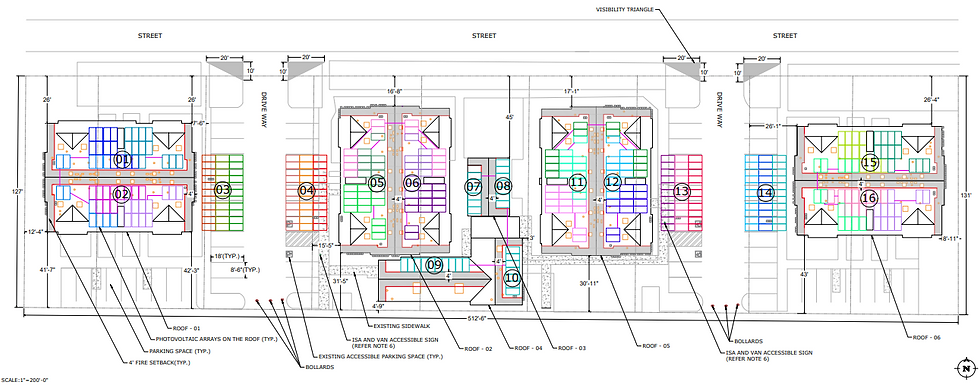
The blueprint, a design masterpiece in itself, unfolds as one unified site plan, embracing the entire property. Simultaneously, it branches into 33 enlarged site plans and Single Line Diagrams (SLD), offering a granular view of each system individually.

Key Takeaways

The case analysis of this 215 kW Rooftop Solar project reflects our dedication, not only to overcome challenges but also to integrate creativity into complexity. Our team, adept in problem-solving, ensured the seamless alignment of interconnections.

In summary, we ensure that every aspect of the plan from code compliance to quality stands as a testament to Illumine-i's commitment towards design complexities, paving the way for a satisfying client experience.  

Frequently Asked Questions

1. What is solar curtailment in Australia?

Solar curtailment occurs when generators are required to reduce output due to grid constraints, despite available solar resource. In the National Electricity Market, this is typically driven by congestion, voltage limits, and system security requirements set by Australian Energy Market Operator.

2. Why is solar curtailment increasing in the NEM?

Renewable capacity is growing faster than transmission infrastructure. Many regional networks were designed to serve demand, not export generation, creating bottlenecks as new solar connects.

3. Can battery storage reduce solar curtailment?

Yes, but only when properly designed. Co-located BESS can reduce curtailment by absorbing excess generation and reshaping exports, provided it is engineered around local network constraints rather than generic assumptions.

4. What is Hybrid Energy Yield Assessment (Hybrid EYA)?

Hybrid EYA models solar, battery storage, load, and grid constraints as a single integrated system. It captures real-time interactions that conventional, sequential energy modelling misses.

5. Which regions in Australia experience the highest curtailment?

Curtailment is most severe in constrained regional zones, particularly western New South Wales, north-west Victoria, and parts of South Australia, where congestion and voltage limits are already binding.

6. How can battery charging contribute to curtailment?

During peak solar periods, high battery charging can increase local voltage, reducing allowable export capacity. If the battery fills too early, it may be unavailable when curtailment risk is highest.

7. What is the difference between structural and recoverable curtailment?

Structural curtailment is driven by persistent transmission limits and requires network upgrades. Recoverable curtailment arises from operational constraints and can often be mitigated through storage design and control strategy.

8. How accurate is Hybrid EYA compared to traditional modelling?

Hybrid EYA provides materially higher accuracy in constrained networks by explicitly modelling voltage limits, export constraints, and battery state-of-charge dynamics that standard yield assessments ignore.

9. When should Hybrid EYA be used?

Hybrid EYA is essential when export limits are below peak generation, networks are voltage-constrained, or battery sizing and control materially affect curtailment and revenue.

10. Will transmission upgrades eliminate curtailment in Australia?

Transmission upgrades will help in the medium term, but they won’t arrive fast enough for projects being developed today. Curtailment risk must be managed through intelligent system design in the interim.